

SOCIAL STUDIES
Part Four:
New Laws, New Technology, and New Challenges
There’s something happening here. What it is ain’t exactly clear
---Buffalo Springfield
The final decades of the history of MPLS were emotional for many. National reforms in education seemed to make headlines every year. The United States Department of Education was created as a federal cabinet department in 1979, to coordinate the many fragmented educational programs created in the active 1960’s and 70’s. State and local educational leaders welcomed increased federal funding and new professional assistance to schools. The National Council for the Social Studies followed up with over a decade of national studies to determine what was being taught in all fifty states and what was missing. This led to the adoption of the National Standards for the Social Studies in 1994.

The “No Child Left Behind” legislation of 2002 focusing on “excellence and equity,” soon followed. By the end of the first decade of the 21st Century nearly every state had adopted new “Common Core” standards for education at every grade level and in every academic discipline; however, Iowa’s work on Social Studies standards was not published until 2017, five years after the Laboratory School closed. Curt Nielsen, a former MPLS Middle School instructor was on the state study committee that prepared the new standards.

Instruction in the NUHS Social Studies Department reflected these new changes, of course, and much innovation occurred, but other more cataclysmic changes were on the way. In the summer of 1991 veteran teachers Rose and Blaga retired and were replaced by two new faculty members, Victoria Robinson and Lee Weber.

In just a few short years Hantula and Nelson would depart, and the Social Studies Department faced new challenges forged by national politics, Iowa State Budget crises, and rapidly changing technological innovations that transformed teaching. One of the earliest changes in this period would prove to be a warning sign of impending trouble. Weber remembers the time clearly.
After teaching high school social studies for 17 years, and adding an M.A. degree and further study at numerous summer institutes, I knew my professional choices were limited if I stayed in the public school system. I could go on to achieve a Ph.D. in Political Science or History, but that really only would pave the way for teaching college courses in those disciplines. My heart was in high school teaching. Another choice was to pursue advancement in school administration, which I really did not want to do at all; I wanted to stay in the classroom. But then a new kind of position at MPLS opened and it seemed perfect. Faculty there could achieve both university tenure and promotion without the research and writing necessary for a doctoral degree. I was actually introduced to three teachers at MPLS who had achieved full professor status without ever writing a dissertation. Two dozen more were at Assistant or Associate Professor status. They did this through contributions to the profession in teaching, research, and service. The service aspect was particularly appealing to me, as I had already made successful professional presentations at local, state, and national conferences, as well as serving professional organizations and creating curriculum. Everything seemed perfect… but then….
I was on the job only a few weeks, when the Provost of the University announced that the tenure and promotion policy was changing. MPLS faculty would only achieve tenure within the Laboratory School Division of the College of Education and no faculty would be promoted without a doctoral degree. With the help of sound advice from my wife, who told me she would be happy to live with a teacher who would remain only an “Instructor” at UNI, I decided to stay at MPLS, but the next few years were to be very different than I had imagined.
There were seven faculty members at MPLS hired under the “old rules” who were now in retroactive limbo. Each one had to make difficult personal and professional decisions. Weber’s colleague in Social Studies, Victoria Robinson, was one of two MPLS faculty members who would go on to garner a doctoral degree: she then served for a short while as Principal at NUHS, and then moved up the ladder in UNI administration. Another faculty member initiated a legal battle and was eventually promoted within UNI’s College of Education. Two others remained at the instructor level, but left the University shortly thereafter. Weber was one of only two tenure-track hires from that period who would remain until the closure of MPLS in 2012. He noted “At the time I only felt the personal impact and I did not realize what this might mean to the future of MPLS itself; but looking back I believe it was the very first warning sign of trouble.”
Despite such difficulties, the social studies faculty pressed ahead. The “new social studies” talked about in the 1980’s was actually coming to life. Students spent less time being lectured to, and much more time in hands on learning activities.
A joint effort with the Cedar Falls Chamber of Commerce in the 1990’s brought the highly acclaimed "Junior Achievement” national program to MPLS social studies classes. Local business owners taught mini-lessons in social studies and business classes and participating students often made connections which led to after school and summer employment.

Participation in another new program was also initiated during those times. The Close-Up Program took MPLS students to Washington, D.C. for a full week of immersion into American Politics, History, and Culture.

In 1994, the Department received a grant which allowed nine students to spend an entire week examining original source documents at the Herbert Hoover Presidential Library. A special collection of presidential papers from the Hoover administration through the Carter administration, provided source material for the document, “Decision-Making at the Source.”
At the same time, nation-wide programs sought to combat bullying in schools. MPLS elementary faculty initiated their own program in 1993, noting that “students were not transferring the level of respect they demonstrated in the classrooms to the more unstructured areas such as recess, lunchtime, and before and after school.” Their positive actions grew into a school wide character education program.
Weber’s fears seem documented in the life of the Social Studies Department in the years that immediately followed. They were certainly compounded by new rumors that State Government budget concerns might cause UNI to close MPLS altogether. All departments and faculty were impacted, but none perhaps as hard as the Social Studies Department. Weber became chair in 1998 and served until MPLS closed in 2012. During that time the Social Studies Department hired 15 teachers, but only four were “tenure track” hires. The rest of the positions were all filled by temporary faculty, adjunct faculty, or term appointments. Only one stayed with the University longer than three years. Weber joked, “Maybe the Department Chair was just too difficult to get along with.”
Enrollment was impacted as well. The NUHS graduating class of 2004 were sophomores when the first rumblings were heard in the spring of 2002. Already the smallest class in the high school with an enrollment of 39, their numbers dwindled to 31 over the summer months.
Despite such difficulties, the “new” social studies faculty continued to lead creative endeavors for students. The four new tenure track hires were notable in several ways:
Mary Beth Kueny played a major role in transitioning Junior High Classes into Middle School courses.

A major part of this work was creating “Units” of study as opposed to semester or year-long classes in History or Geography disciplines. Kueny continued the student-centered focus of Middle School Social Studies. She spearheaded a Sociology Unit for her seventh graders, where students engaged in their own sociology experiments, sometimes at home with their families and also in the classroom.
Lyn Countryman, Kueny's Colleague, recalls that:
My seventh grade daughter was challenged to conduct the salt and pepper sociology experiment at the dinner table in our home. In this experiment the seventh grader was to quietly place a salt shaker close to one parent’s plate and observe when the parent would notice and comment. My husband didn’t notice so then my daughter moved the pepper shaker close to his plate. Still he didn’t comment. She continued to move three other condiments around his plate and he just kept eating, saying nothing. Finally, she took her fork and ate something off his plate. He looked at her funny and said, ‘what are you doing?’
The seventh graders learned a great deal about favoritism, aggression, and human reactions. The conversations they had in class the next day were robust and peaked their interest in doing more active experiments.
I remember an experiment where the students set up a panel to judge whether two lines given on the over-head were the same length. Succeeding lines were increasingly disparate. The panel was set up with nine 7th grade students always saying the lines were the same length when the lines were not. The last person in the panel was not part of the 7th grade panel. The sociological question was how long would it take for the last person to succumb to peer pressure and go along with the previous nine students who were instructed to say the lines were equal no matter what. At the end of the day, seventh graders were appalled at how many of these students just went along with the group even though they could see the lines were different lengths, said Countryman.
Kueny also worked closely with other members of the seventh grade team to develop interdisciplinary units such as the Forensic Science unit paired with the TRIAL unit. In science students collected forensic evidence that was later used in the Trial. Students played prosecutors and defense attorneys, called witnesses, and ran a trial. It was student-driven and the outcome was not predetermined, but was decided by which team did a better job stating its case and supporting it by evidence and testimony. Kueny was so student-centered she worked with Lyn Countryman to develop and co-teach a seventh-grade Language Arts curriculum for one year, at the same time as teaching her seventh grade social studies units.

Paul Horton, created a strong History Day program, which saw several students advance to state competition. After leaving MPLS Horton had a distinguished career at the University of Chicago Laboratory Schools, where several of his students went on to national awards in History Day competitions.

B.J. Herrick, who came from New York City, provided great insights for students about the terrorist attack on 9-11 and its aftermath. She prompted many student research projects, and led student field trips to Iowa’s new African American Museum and the National Czech and Slovak Museum and Library. She later returned to NYC and continued her career with Educational Management Publications.

Jason Follett left MPLS after only three years, but went on to teach at Iowa State University and to serve in several positions for the Iowa Council for the Social Studies.

The sixth grade Language Arts/Social Studies instructor Richard (“Rick”) Vanderwall detailed some of the new units from the 6th grade Social Studies Curriculum in the 2005-06 school year:
Quarter One: Landforms of Iowa;
Native American Tribes of Iowa
Quarter Two: Pioneer History; Early Government; Famous Iowans
Second Semester: Ancient Civilizations; Timelines and the Theory of Time; Timeline Fair:
Paleolithic History; Neolithic History; Egyptian History; Grecian History; Roman History
Meanwhile Victoria Robinson taught high school Social Studies classes in the department for four years. She was innovative and creative in the classroom, even coming into classes one day in full “Queen Victoria” costume. She was an active presenter at state, regional, and national conferences.
A fellow faculty member remembers her special gift for humor. Robinson would work with cheerleaders to have faculty members become involved in “Saturday Night Live” type skits. These included successfully getting three male coaches to dress in drag for one skit, getting a faculty member to portray Roy Orbison lip-synching “Pretty Woman” to a high school student in another, and creating a “David Letterman Top Ten Skit” in another. Former students still tell legendary tales about these events, which created a special cohesive feeling in the school.
Robinson had a unique talent for listening to students and to colleagues. As a result, she was one of the best liked teachers by students, and one of the most respected by colleagues. The evidence of that esteem was documented in 1995, when a vacancy occurred in the position of Principal at NUHS. College of Education budget restraints limited the options of a full search, and MPLS was told to find a new principal from within. The faculty embraced Robinson, who served with distinction for four more years, before being promoted and serving the College of Education for 16 more years in various administrative roles, including Department Head and Acting Dean.
Weber, meanwhile, did pursue his own professional goals by making over 80 professional workshop presentations at state, regional, national, and international conferences during his 21-year career at UNI. While at MPLS he inspired two new course offerings. The first was a transformation of the old Law-Related Education course, which had only a few students. He remolded that course into a new offering titled, “Criminal Justice.” With dozens of role-play situations, guest speakers, and field trips to jails, trials, and a concluding trip to an Iowa prison, the course soon became one of the most popular electives in the high school.
In addition, Weber successfully lobbied to have the required study of American History increased from two semesters to three. The new course, titled “Twentieth Century U.S. History,” allowed for student activities that were simply impossible in teaching earlier periods. Students were able to access original sources to research recent history. They created bulletin boards, magazines, and newspapers; they collected recent era artifacts and they found guest speakers who lived through the Depression, WW II, Vietnam, and Civil Rights era. Weber will always remember a visit by an elderly retired John Deere engineer who was a young apprentice to Henry Ford in the 1920’s and got to know Ford well along with other inventors and creators including Harvey Firestone, George Washington Carver, and even Thomas Edison. He served as an important design engineer for Ford until 1959 when he left Detroit and came to Waterloo to work for John Deere. Few other classrooms had such unique experiences.
Arising from this new study of recent history came Weber’s favorite innovation. This was the Family History Scrapbook Project. Students examined their own family history by studying original family records, collections of artifacts, and of course, by conducting interviews with living ancestors. Over the years Weber saw family scrapbooks at High School graduation receptions and heard family stories about their creations at numerous Parent-Teacher conferences. Many told stories of older family members that the parents had never heard before, and were grateful that the classroom project encouraged family legends to be saved and passed down for future generations. While Weber received numerous teaching awards, he felt this small student project idea was his finest contribution to social studies education. He commented often, “Long after my students forgot who won what battle in what war, they had treasures that would keep precious family stories alive forever.” (It should be noted, that students who wished to not study family history for personal reasons could opt to do a study of some local history institution, such as a famous business, organization, or architecture.)
During the last two decades of the Lab School existence, there were also inroads made by faculty into collaboration with other departments. Students who took part in international trips organized by faculty in the Foreign Language Department (that changed its name to the World Language Department in 2000) were often asked to contribute in social studies classes. A mini “American Slang” workshop for visiting students was created, examining the cultural peculiarities of expressions like “I got shotgun,” “bite the bullet,” “spill the beans,” and other strange colloquialisms confusing to students from abroad.
At the same time, technological advancements impacted all classes. The new Apple Computer lab put in place at the MPLS Library in the early 1990s provided great opportunities for students. Gail Froyen, MPLS librarian from 1990-98, believes the Social Studies Department made more use of the new computer lab than any other secondary department, as faculty regularly sent groups of students to access original sources like famous documents, photos, and biographies. Froyen even used library funds to purchase special decades studies sources for the Twentieth Century class and extensive materials for a new mini course on “1968” taught by Rick Vanderwall from the Language Arts Department.


After Gail Froyen’s retirement, the MPLS Library was directed by David Tallakson and later by Lou Weber. They were both involved in teaching research in the new age of technology to Middle School and High School students alike. The Social Studies Department continued to make use of this opportunity to the greatest extent possible.
For example, Tallakson, along with J.D. Cryer (Middle School Language Arts teacher) and Paul Horton (Middle School Social Studies teacher), wrote a unit about the Caribbean. Tallakson focused on the cultural life (books, food, music, art), Horton on the World Bank and monetary lending, and Cryer on the literature/language. Cryer and Tallakson presented this project at the National Middle School Association conference in Florida. Tallakson left in 2001.
After working with Tallakson for two years, Lou Weber became the MPLS sole librarian from 2001 till MPLS closed in 2012.
This was the era when technology changes were hectic. Beginning in about 2009, through a one-to-one initiative, each high school student was given a personal laptop or iPad. Computer projection systems (Smart Boards) were given to each unit/department and to the library. When MPLS closed, Lou Weber echoed Froyen’s earlier comments that the students and faculty of the high school Social Studies Department were among the library’s most frequent visitors.
Lou Weber received an iPad and Apple's iPad training so she was able to assist students. In the Lab she assisted students with UNI's databases for research purposes. Lou Weber recalls students from Lee Weber’s decade studies courses regularly coming to the library in small groups of 4-6 students and going right to the computers to help create newspapers and magazines as they were done in the latter half of the 20th century.
The crowning achievement was in the form of a national grant in 2005. That year MPLS was one of the first five schools in the nation to be honored as a “First Amendment School.” Dr. Jeffrey Cornett, the Dean of the College of Education from 2003-2009, helped lead the effort. Cornett, who had two children attending NUHS at the time, said in part, “Price Laboratory School is committed to serving Iowa as the laboratory where students, educators, and community members come together to shape the future of our democracy.” Sam Chaltain, the National Director, added “We see Price Lab School as a crucial anchor for this work nationally.”
And then, all too quickly, the end was near. In 2012 came the news that MPLS would close. Weber, like other tenured secondary faculty, was able to continue his career in the College of Education. The other two members of the Social Studies Department, Sarah Carlson and Courtney Clausen, would continue their studies and pursue new teaching careers elsewhere.
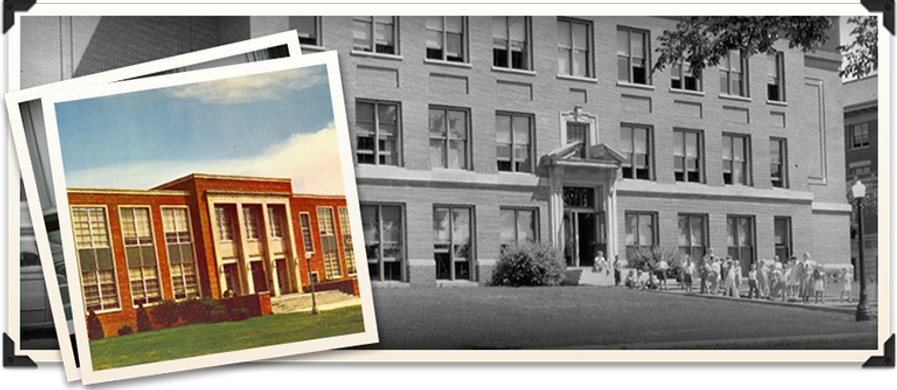
The new gym that had been built after the fire of 1993 would remain in service to UNI, but the older academic structure would soon be leveled to make room for tennis courts. Weber and his colleagues would say goodbye to MPLS, but they would never forget the rewards that came from teaching there, or the students who created the memories.
Receive the latest news and updates in your inbox

Receive News and Updates
